Serving Idaho ANd Washington
Dust Control
At Valley Sweeping, we provide dependable dust control services that help keep roads, jobsites, and active work areas safer, cleaner, and more manageable. Our team takes a practical, responsive approach to dust suppression, helping reduce airborne dust, improve visibility, and support better day-to-day site conditions for crews, drivers, and nearby properties. Proudly serving roads, job sites, and industrial facilities across Idaho and Washington.
Miles
Gallons
Years in Business
Air Quality
How We Spray
Effective Dust Control
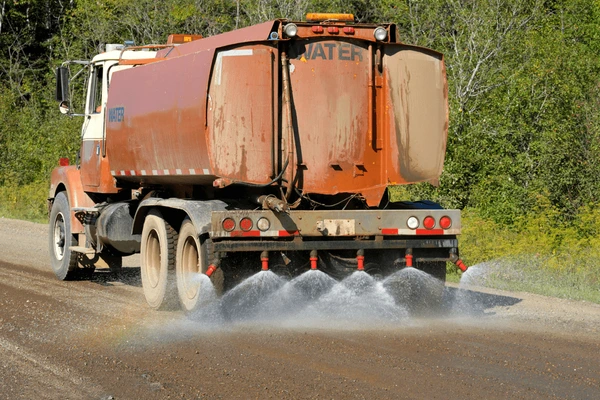
Our dust control services are designed for roads and work areas where traffic, dry conditions, and loose material create ongoing dust issues. We apply dust control with a practical focus on site conditions, traffic volume, and surface performance to help reduce airborne dust, improve visibility, and keep the area more workable throughout the day.
- Gravel Parking Lots
- Dirt Roads
- Construction Sites
- Industrial Facilities
- Residential Driveways
- Aggregate Plants
Dust Mitigation
Keep your equipment cleaner and your crews happier by dramatically reducing airborne dust.

Erosion Control
Keep your road ways stable, compact, and avoid excessive ruts with our formula.
Durable Applications
Applications can last 1-4 months depending on traffic volume.

Fast Scheduling
Schedule your mitigation when you need it and we'll be there.
Common Questions
Dust Control FAQs
How often does dust control need to be applied?
It depends on traffic, weather, surface condition, and the product being used. Water usually requires frequent reapplication, while chloride-based suppressants can last much longer but still need touch-ups depending on rainfall, traffic, and road base condition.
Can rain wash away dust control treatment?
Yes, especially with lighter or temporary applications. Rainfall is one of the main reasons treatments need touch-ups or reapplication. More durable suppressants generally hold up better than plain watering, but weather still affects performance.
What roads or surfaces are best suited for dust control?
Dust control is most commonly used on unpaved roads, haul roads, construction routes, industrial access roads, yards, and other traffic areas where loose fines get kicked airborne. It is most effective where the surface can be maintained and traffic patterns are reasonably consistent.
What works better for dust control: water or chemical suppressant?
Water works fast but does not last long, especially in hot, dry, or windy conditions like Lewiston experiences. Chemical suppressants usually last longer because they help retain moisture or bind fines in the road surface, but the right choice depends on use case, budget, runoff concerns, and how permanent the control needs to be.
How long does a dust control application last?
There is no universal number. Longevity depends on traffic volume, rainfall, wind, grading frequency, and surface prep. Some treatments may last only days if it is just water, while properly applied suppressants on a stable surface can last for months, with reapplication based on conditions.
Are there regulations around dust control on construction sites?
Yes. Construction sites are subject to air quality regulations that require active dust suppression to limit airborne particulates. The EPA's particulate matter guidelines outline the health risks of airborne dust and why mitigation is required on active job sites. Valley Sweeping helps contractors stay compliant and keep surrounding areas cleaner.
Cities We Serve
- Lewiston
- Moscow
- Orofino
- Kamiah
- Kooskia
- Clarkston
- Pullman
- Colfax
- Palouse
- Asotin